Resources and templates

Useful WHS resources without the clutter.

Public templates, guidance and practical resources. For online SWMS and Pre-start Checks, launch the existing PSA Tools platform.

All resources Templates Guides
SWMS Explained

Guides

SWMS Explained

What They Are, When You Need One, and Why They Matter

Safe Work Method Statements, commonly known as SWMS, are one of the most misunderstood safety documents in Australia.

Many businesses believe they need a SWMS for every task they perform. Others complete a SWMS simply to satisfy a client requirement and never look at it again.

The reality sits somewhere in the middle.

What is a SWMS?

A Safe Work Method Statement is a document that identifies:

  • High-risk work activities

  • Hazards associated with those activities

  • Risks that may arise

  • Control measures used to reduce those risks

A SWMS should explain how work will be carried out safely.

When is a SWMS Required?

Under Australian WHS legislation, a SWMS is required for High Risk Construction Work.

Examples include work:

  • At heights

  • Near powered mobile plant

  • Near energised electrical installations

  • In or near trenches

  • In confined spaces

  • Adjacent to traffic

  • Involving demolition

  • Near water where there is a risk of drowning

A SWMS may also be required by clients, principal contractors, or company policy.

What Should a SWMS Include?

A practical SWMS should identify:

The Work Activity

What work is being performed?

The Hazards

What could cause harm?

Examples include:

  • Falls

  • Moving plant

  • Electricity

  • Traffic

  • Weather conditions

The Risks

How serious are the consequences if something goes wrong?

Control Measures

What controls will be used?

Examples include:

  • Exclusion zones

  • PPE

  • Spotters

  • Traffic management

  • Isolation procedures

Common SWMS Mistakes

Copying Generic Documents

Many SWMS are downloaded from the internet and never reviewed.

A SWMS should reflect the actual work being performed.

Making Them Too Long

A 50-page SWMS is unlikely to be read on site.

A practical SWMS should be clear, concise and relevant.

Failing to Review the SWMS

Conditions change.

Weather changes.

Sites change.

Workers change.

A SWMS should be reviewed whenever circumstances change.

Treating the SWMS as a Filing Exercise

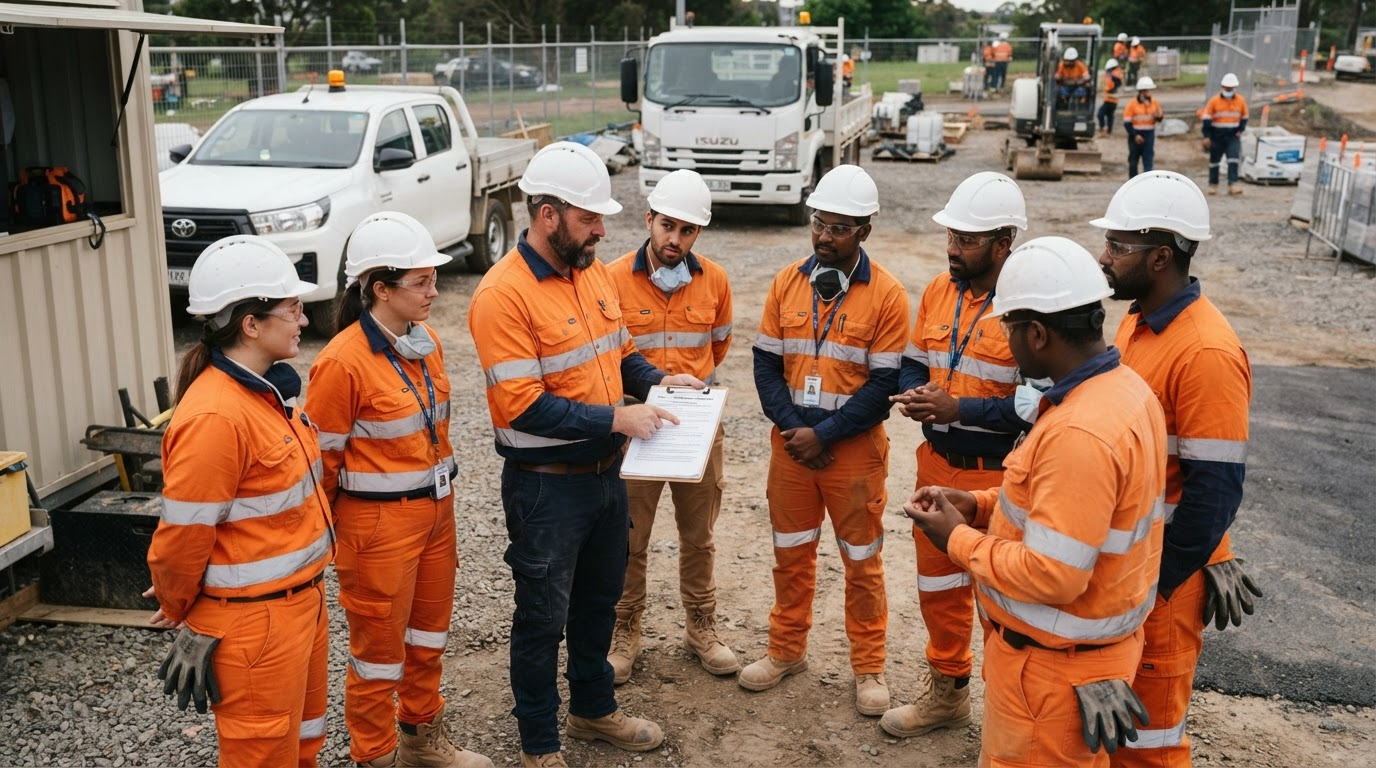
The SWMS should be discussed with workers before work begins.

A SWMS sitting in a folder does not control risk.

How Does a Good SWMS Improve Safety?

A good SWMS helps workers:

  • Understand the work

  • Identify hazards

  • Apply controls consistently

  • Stop and reassess when conditions change

It also helps demonstrate that risks have been considered before work starts.

SWMS, Toolbox Talks and Pre-Starts

The most effective safety systems combine:

  • SWMS

  • Toolbox talks

  • Pre-start inspections

Together these provide planning, communication and verification.

The Bottom Line

A SWMS is not simply a compliance document.

When used properly, it is a practical tool that helps workers identify hazards, manage risks and perform work safely.

The best SWMS are easy to understand, site-specific and actively used by workers, not just filed away in an office.

Practical Safety Advisory provides simple, practical tools for creating SWMS, conducting pre-start inspections and delivering toolbox talks.
Download PDF

SWMS Explained · 276.3 KB

Understanding Your PCBU Duties

Guides

Understanding Your PCBU Duties

A practical guide for small business owners

Many business owners have heard the term "PCBU" but aren't entirely sure what it means or what their legal responsibilities are.

The good news is that the concept is much simpler than many people think.

What is a PCBU?

PCBU stands for Person Conducting a Business or Undertaking.

In practical terms, if you operate a business, employ workers, engage contractors, run a farm, manage a company, or conduct any work activity, you are likely a PCBU.

Examples include:

  • Builders

  • Electricians

  • Landscapers

  • Farmers

  • Transport operators

  • Professional service firms

  • Medical practices

  • Plant hire businesses

A company can be a PCBU, and in some cases individuals can also have responsibilities as officers of the business.

What Does a PCBU Have to Do?

The Work Health and Safety legislation requires PCBUs to ensure, so far as is reasonably practicable, the health and safety of workers and others who may be affected by the work.

That sounds complicated, but it really comes down to five key responsibilities.

1. Provide a Safe Workplace

Workplaces should be free from obvious hazards wherever possible.

This includes:

  • Safe access and egress

  • Good housekeeping

  • Appropriate lighting

  • Safe traffic management

  • Suitable amenities

2. Provide Safe Systems of Work

Workers should understand how work is to be performed safely.

Examples include:

  • Safe Work Method Statements (SWMS)

  • Procedures

  • Work instructions

  • Toolbox talks

  • Pre-start inspections

3. Provide Safe Plant and Equipment

Equipment should be:

  • Fit for purpose

  • Properly maintained

  • Inspected regularly

  • Used by competent people

4. Provide Information, Training and Supervision

Workers need to understand:

  • Hazards

  • Risks

  • Controls

  • Emergency procedures

Training alone is not enough. Appropriate supervision is also required.

5. Consult With Workers

Workers often identify risks before management does.

Consultation may include:

  • Toolbox talks

  • Safety meetings

  • Hazard reporting

  • Informal discussions

What Does "Reasonably Practicable" Mean?

The law does not require perfection.

It requires businesses to do what is reasonably able to be done to eliminate or minimise risk.

When determining what is reasonably practicable, factors include:

  • The likelihood of harm

  • The severity of potential consequences

  • What is known about the hazard

  • Available control measures

  • Cost versus risk

Common Mistakes Made by Small Businesses

Many businesses believe that safety is only about paperwork.

In reality, paperwork is only evidence of a safety system.

Common mistakes include:

  • SWMS completed but never used

  • Hazard reports ignored

  • Toolbox talks not conducted

  • Plant inspections not recorded

  • Workers not consulted

How Can You Demonstrate Compliance?

Good examples include:

  • Current SWMS

  • Pre-start inspections

  • Toolbox talks

  • Training records

  • Maintenance records

  • Incident reports

  • Hazard registers

These records help demonstrate that safety is actively managed.

The Bottom Line

Being a PCBU is not about creating endless paperwork.

It is about identifying hazards, managing risks, consulting with workers, and taking reasonable steps to keep people safe.

When safety systems are practical and easy to use, compliance becomes much easier and workplaces become safer.

Need help creating SWMS, pre-start inspections or toolbox talks? Practical Safety Advisory provides practical tools designed specifically for Australian businesses.

Download PDF

Understanding your PCBU Duties · 280.0 KB

Need more than a template?

Use the tools platform or ask about ongoing WHS support.

Launch PSA Tools for online SWMS and Pre-start Checks, or contact Practical Safety Advisory for support with safety systems and documentation.