A serious workplace incident has occurred.
Someone has called Workplace Health and Safety Queensland (WHSQ), or perhaps the incident was notifiable and the regulator has been notified.
An inspector arrives.
What happens next?
For many business owners and managers, their first substantial interaction with WHSQ happens at exactly the wrong time: immediately after something has gone seriously wrong.
Understanding the process beforehand can help you respond calmly, preserve important information and avoid making an already difficult situation more complicated.
Why Might WHSQ Attend a Workplace?
Not every visit from a WHSQ inspector follows a workplace injury.
Inspectors have broad functions that include providing information about compliance, resolving WHS issues, requiring compliance through notices, investigating possible contraventions and assisting in prosecutions. Under Queensland's Work Health and Safety Act 2011, an inspector can enter a place that is, or that they reasonably suspect is, a workplace, generally without requiring the consent of the person managing or controlling it.
An inspector may therefore attend because of:
- a notifiable incident
- a worker or public complaint
- an identified workplace hazard
- a compliance campaign
- an issue identified during another inspection
- a suspected contravention of WHS legislation.
The purpose and scale of the visit will vary considerably.
A routine inspection is very different from an investigation following a serious injury or fatality.
The First Priority Is Safety
If an incident has just occurred, looking after injured people and controlling any continuing danger comes first.
Depending on the circumstances, there may also be legal requirements concerning notification and preservation of the incident site.
Do not start dismantling equipment, cleaning up or changing the scene simply because everyone wants operations returned to normal.
There are exceptions where action is necessary, including assisting an injured person or making the site safe, but after a serious or notifiable incident you should understand your obligations before disturbing the site.
When the Inspector Arrives
A WHSQ inspector does not necessarily need to make an appointment.
Queensland legislation permits an inspector to enter a workplace without prior notice. After entering, the inspector will ordinarily take reasonable steps to notify relevant parties of the entry and its purpose, although there are circumstances where notification is not required immediately.
The person dealing with the inspector should remain professional and cooperative.
It is sensible to identify:
- who the inspector is
- why they are attending
- who within your organisation should coordinate the response
- whether specialist WHS or legal assistance is required.
Avoid having five different managers independently providing documents and information. Having an appropriate person coordinate the organisation's response can help keep the process orderly.
What Can an Inspector Look At?
Quite a lot.
After lawfully entering a workplace, an inspector's powers can include inspecting and examining the workplace and things within it, making inquiries, examining documents, taking measurements, conducting tests, making photographs and other recordings, taking samples and requiring reasonable assistance.
Depending on the incident, this could mean examining:
- plant and equipment
- guards and isolation arrangements
- the physical incident location
- tools
- photographs or CCTV
- maintenance records
- risk assessments
- Safe Work Method Statements
- pre-start records
- training and competency records
- policies and procedures
- incident records.
The precise information relevant to an investigation will depend on what occurred.
This is one reason good WHS documentation should reflect what actually happens in the workplace rather than simply existing to satisfy an audit.
Inspectors May Speak With Workers
Documents only tell part of the story.
An inspector may want to understand how work was actually performed.
That can involve speaking with workers, supervisors and managers.
Questions might explore matters such as:
- What normally happens when this task is performed?
- Who trained you?
- What instructions were you given?
- Were you aware of the relevant procedure?
- Was the equipment normally used this way?
- Had the hazard been raised previously?
- What happened immediately before the incident?
The important principle is simple: tell the truth.
Do not coach workers about what they should say, attempt to develop a collective version of events or speculate about facts you do not know.
There are specific legal provisions governing inspectors' powers to require documents and answers to questions, including circumstances in which a representative may be present. If an investigation has potentially serious legal consequences, obtaining appropriate legal advice is sensible.
The Inspector Is Looking Beyond the Immediate Incident
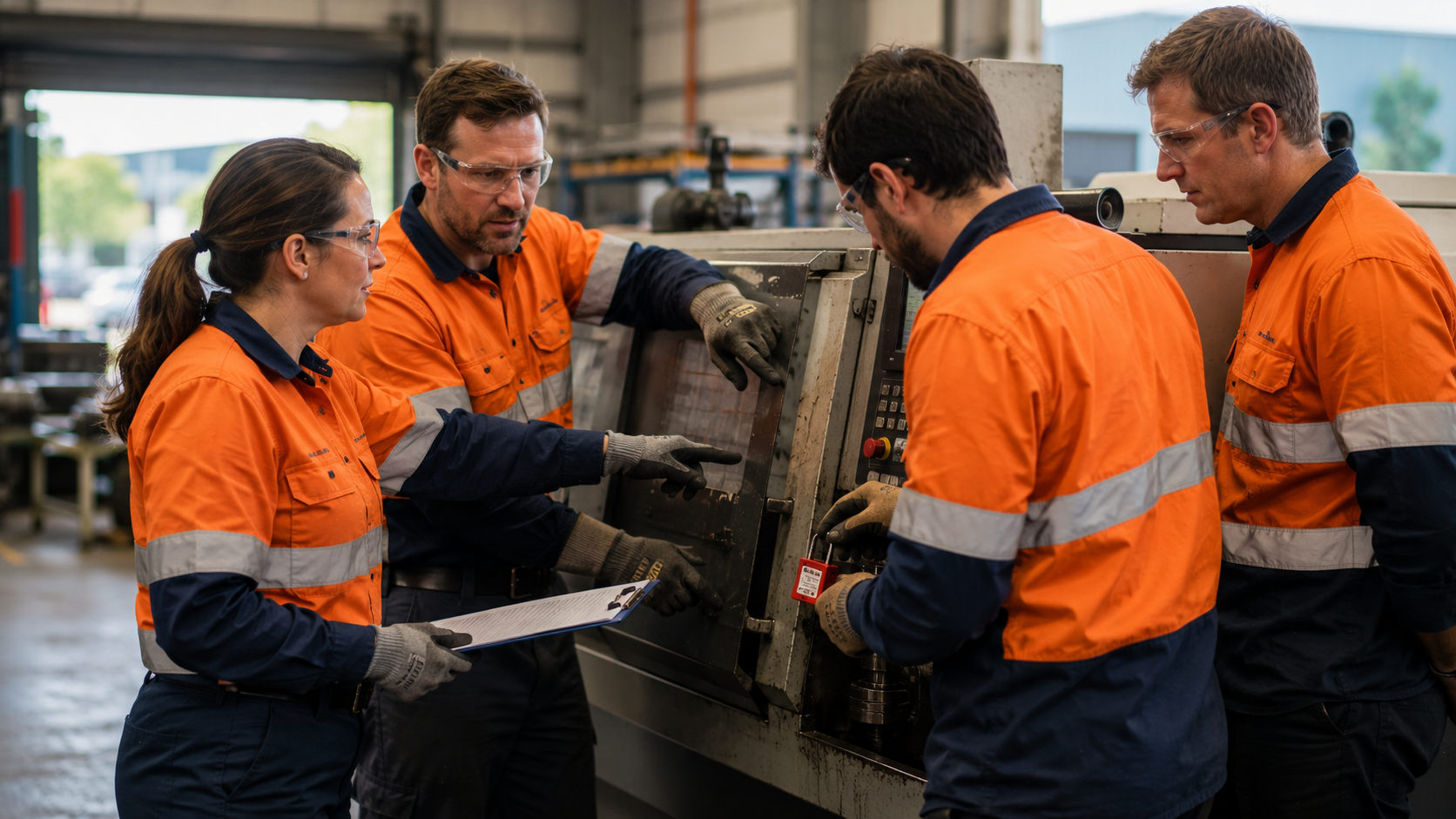
Imagine a worker is injured while accessing part of a CNC machine during maintenance.
It would be easy to focus exclusively on the worker's actions:
Why did they put their hand there?
A proper investigation may go considerably further.
For example:
- Was suitable guarding installed?
- Could the plant have been properly isolated?
- Was an isolation procedure available?
- Had workers been trained in that procedure?
- Was the equipment maintained?
- Had the same issue happened before?
- Were previous faults or near misses reported?
- Did supervisors know how the task was being performed?
- Was production pressure influencing behaviour?
The investigation may therefore move from what happened to why the organisation's controls allowed it to happen.
That distinction matters.
A SWMS or Procedure Is Not Automatically Proof of Safe Work
One common mistake is assuming that producing a document ends the discussion.
It doesn't.
If your procedure says machinery must be isolated before maintenance, an inspector may reasonably be interested in whether workers were actually isolating it.
If your records say workers were trained, there may still be questions about whether they understood and applied that training.
If a risk assessment identified a control, was that control actually implemented?
The difference between a documented safety system and the real system of work can become very important during an investigation.
What About Notices?
An inspector's involvement does not automatically mean prosecution.
Where a contravention or risk is identified, WHSQ says that some matters may be rectified immediately in the inspector's presence. Where immediate rectification is not possible, a notice may be issued. Enforcement options can include statutory notices and, in more serious circumstances, other enforcement action.
Two notices businesses should particularly understand are:
Improvement notices
Broadly, an improvement notice may be issued where an inspector reasonably believes a person is contravening WHS requirements, or has contravened them in circumstances suggesting the contravention is likely to continue or recur.
The notice requires the issue to be addressed within the specified period.
Prohibition notices
A prohibition notice deals with a much more immediate situation.
Where an inspector reasonably believes an activity involves, or may involve, a serious risk from immediate or imminent exposure to a hazard, they may direct that the activity stop or only continue in a specified way until the risk has been remedied.
Receiving a notice should not be treated as an administrative inconvenience.
Understand exactly what it requires, who is responsible for responding and when compliance is required.
What Happens After the Workplace Visit?
The investigation may not finish when the inspector drives away.
WHSQ advises that at the end of a workplace visit an inspector will generally summarise possible outcomes, explain actions required and explain notices that have been issued. An inspection report may also be provided.
Depending on the matter, there may subsequently be requests for additional documents, further interviews or other investigative activity.
Possible outcomes vary enormously.
They may range from no further action or compliance action through to infringement notices, enforceable undertakings or prosecution in appropriate cases.
A workplace incident does not automatically result in prosecution.
Nor should a business assume that fixing the immediate hazard automatically ends the regulator's interest in how the incident occurred.
What Should You Do Before an Inspector Ever Arrives?
The best time to prepare for a WHSQ investigation is when you are not having one.
That does not mean creating an "inspector folder" full of paperwork.
It means having a safety system that genuinely reflects your workplace.
Consider whether:
- your risk assessments reflect actual work
- SWMS are understood and followed where required
- pre-starts identify genuine problems rather than becoming tick-and-flick exercises
- plant maintenance records are current
- training and competency records are available
- workers know how to report hazards and near misses
- reported problems are actually followed up
- supervisors understand their safety responsibilities
- serious incidents are escalated appropriately
- managers know who will coordinate the response if an inspector attends.
Most importantly, ask yourself whether the documented system and the way people actually work tell the same story.
An Investigation Tests the System You Already Have
A WHSQ investigation is not the time to discover that the maintenance records are incomplete, nobody can find the risk assessment and the procedure bears little resemblance to how the task is performed.
Good WHS management happens before the incident.
It happens when supervisors act on reported hazards.
It happens when defective equipment is taken out of service rather than worked around.
It happens when a pre-start identifies something wrong and somebody actually fixes it.
And it happens when management periodically asks a very simple question:
Is this how the work is really being done?
If you are unsure how your safety arrangements would stand up to scrutiny after a serious incident, Practical Safety Advisory can help you review the systems you have and, more importantly, how they are working in practice.
This article provides general information about workplace health and safety in Queensland. It is not legal advice. Businesses dealing with a serious incident or regulatory investigation should consider obtaining advice appropriate to their circumstances.