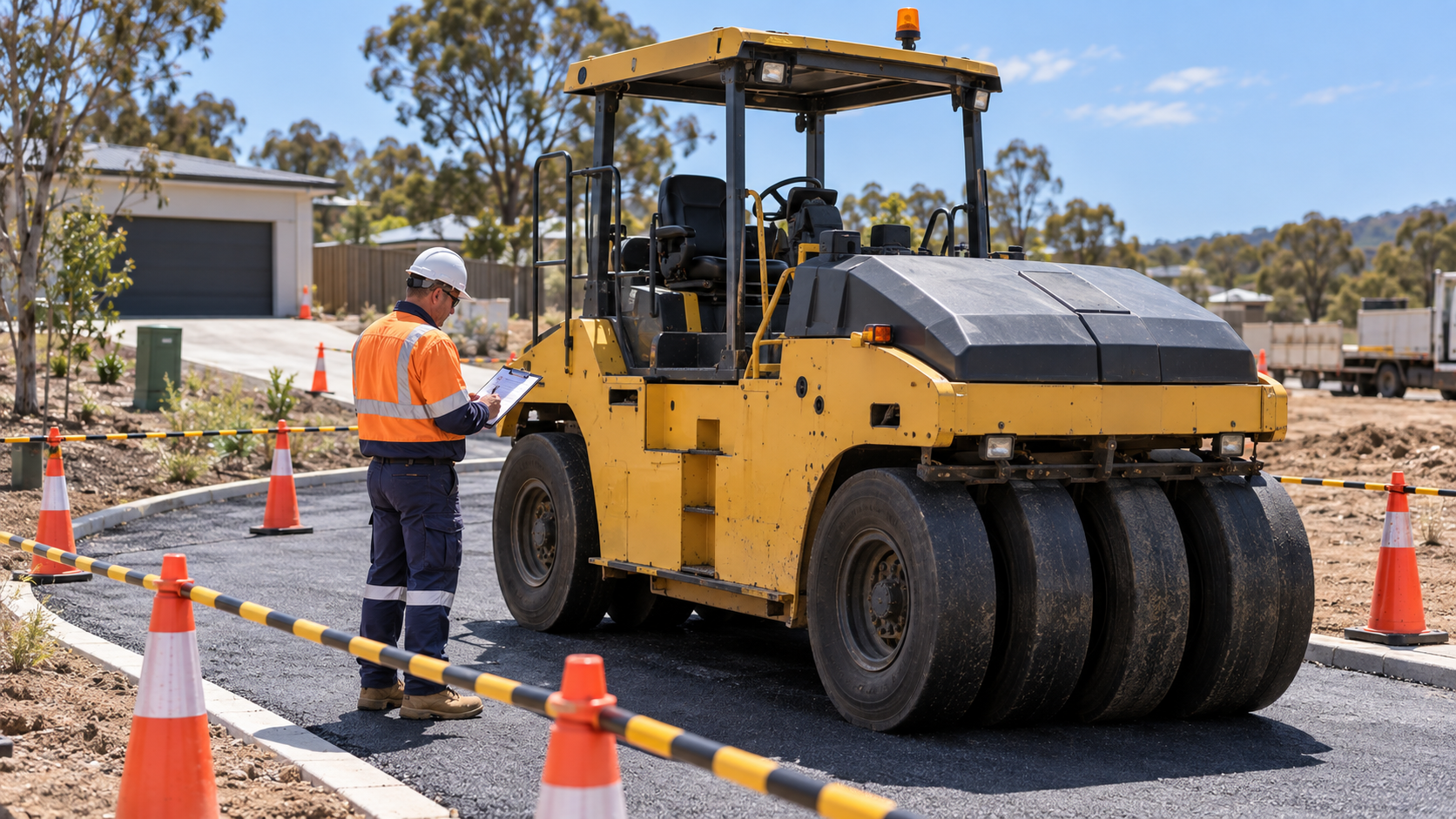
A Queensland construction company has been fined $400,000 after a 16-year-old volunteer worker was fatally run over by an unmanned multi-tyred road roller during asphalt-laying work.
The company was sentenced in the Beenleigh Magistrates Court on 25 July 2025 after pleading guilty to a breach of section 32 of the Work Health and Safety Act 2011 (Qld). A conviction was recorded. The company was also ordered to pay $1,500 in professional and legal costs and $101.40 in court costs. The fine was referred to the State Penalties Enforcement Registry for payment.
What happened
The incident occurred in October 2022 at a residential property in Alberton, Queensland. The incident occurred on or around 12 October 2022, while the court report also lists 1 August 2022 through 13 October 2022 as offence dates.
The company was undertaking asphalt driveway work using mobile construction equipment, including a multi-tyred road roller. The affected person was a 16-year-old unpaid volunteer undertaking labouring tasks and work experience with the hope of obtaining employment.
The child worker had been observed operating the roller on several occasions, even though they had not been assessed or authorised to operate it and had not been shown the company's safe work method statement.
The roller was not fitted with an interlock device. As a result, it could be started, placed in gear and travel without an operator remaining in the seat.
The investigation also identified maintenance problems with some of the roller's water sprayers. Without adequate water spray, the tyres could pick up newly laid asphalt. Workers described manually scraping the tyres while the roller moved away under power, including on occasions when the operator had left the machine. The court material stated that this method had not been shown to the child worker.
A homeowner later observed the roller moving slowly and unmanned on the newly laid driveway, with the child's legs and boots visible from the side. Workers and homeowners attended, and emergency services were called. The child died at the scene from multiple crush injuries.
What the court found
The court found that the company, as the person with management or control of the plant, had a duty to ensure the roller was safe and without risk to workers at the workplace.
The court material identified several failures:
- the child worker was not trained, assessed or authorised to operate the roller;
- the worker had not been shown the relevant safe work method statement;
- the roller lacked an interlock device that could have reduced the risk of unattended movement;
- supervision systems did not ensure that only authorised operators used the plant; and
- the company's risk management process had not been properly completed.
The court noted that the safe work method statement already stated that only instructed, trained and competent operators were to use the plant. However, that control was not implemented in practice.
The court regarded the lack of authorisation, the worker's inexperience and age, and the lack of supervision as aggravating features. It also found that the incident should not have occurred and was preventable. General deterrence and denunciation were important considerations in setting the penalty.
The company cooperated with the investigation and had no previous convictions for like matters. Those factors were noted in mitigation, but the seriousness of the offending warranted a recorded conviction and substantial fine.
Why this matters to business managers
This case demonstrates that a written procedure does not control risk unless it is understood, implemented and checked at the workplace.
It also highlights the need to treat volunteers, work-experience participants and workers on trial arrangements as part of the workplace risk picture. A person does not need to be an employee or paid worker before plant, supervision and competency risks must be addressed.
For businesses using mobile plant, the critical controls need to be practical and visible. These may include:
- restricting plant operation to workers who have been trained, assessed and formally authorised;
- checking that young, inexperienced or temporary workers understand what they must not do;
- preventing access to operator controls where authorisation has not been given;
- ensuring plant safety features, including operator-presence or interlock systems where appropriate, are installed and maintained;
- inspecting and repairing equipment before it is used;
- prohibiting workers from leaving mobile plant operating or moving without an operator;
- identifying safe methods for clearing material from plant and ensuring workers never improvise around moving equipment; and
- assigning supervisors who actively monitor work rather than relying only on paperwork.
The exact controls will depend on the plant, task and workplace. Businesses should assess the risks associated with their own equipment and work arrangements and obtain suitable professional assistance where required.
What managers should take note of
- Authorisation must be more than a statement in a document. Keep a clear register of who may operate each item of plant and verify that the person has been trained and assessed.
- Young and inexperienced workers need closer controls. Explain the limits of their role, provide direct supervision and do not assume that observation or informal work experience is enough.
- Plant safeguards should be considered alongside administrative controls. A safe work method statement cannot substitute for effective engineering safeguards, maintenance and supervision.
- Never normalise unsafe workarounds. Procedures for clearing asphalt or other material from equipment must not involve a machine travelling unattended or a person working near moving plant.
- Supervisors must check what happens in practice. Regularly observe work, intervene when controls are bypassed and escalate defects or unsafe practices immediately.
- Review volunteer and work-experience arrangements. Before a person starts, define the tasks they may perform, the supervision required, the equipment they must not use and the escalation process for concerns.
Source information
- Regulator: Workplace Health and Safety Queensland
- Source type: Regulator summary
- Court: Beenleigh Magistrates Court
- Decision date: 25 July 2025
- Source limitation: No court judgment or separate sentencing remarks were attached to the supplied material. The official regulator summary should be checked before publication, particularly for the incident date and plant details.