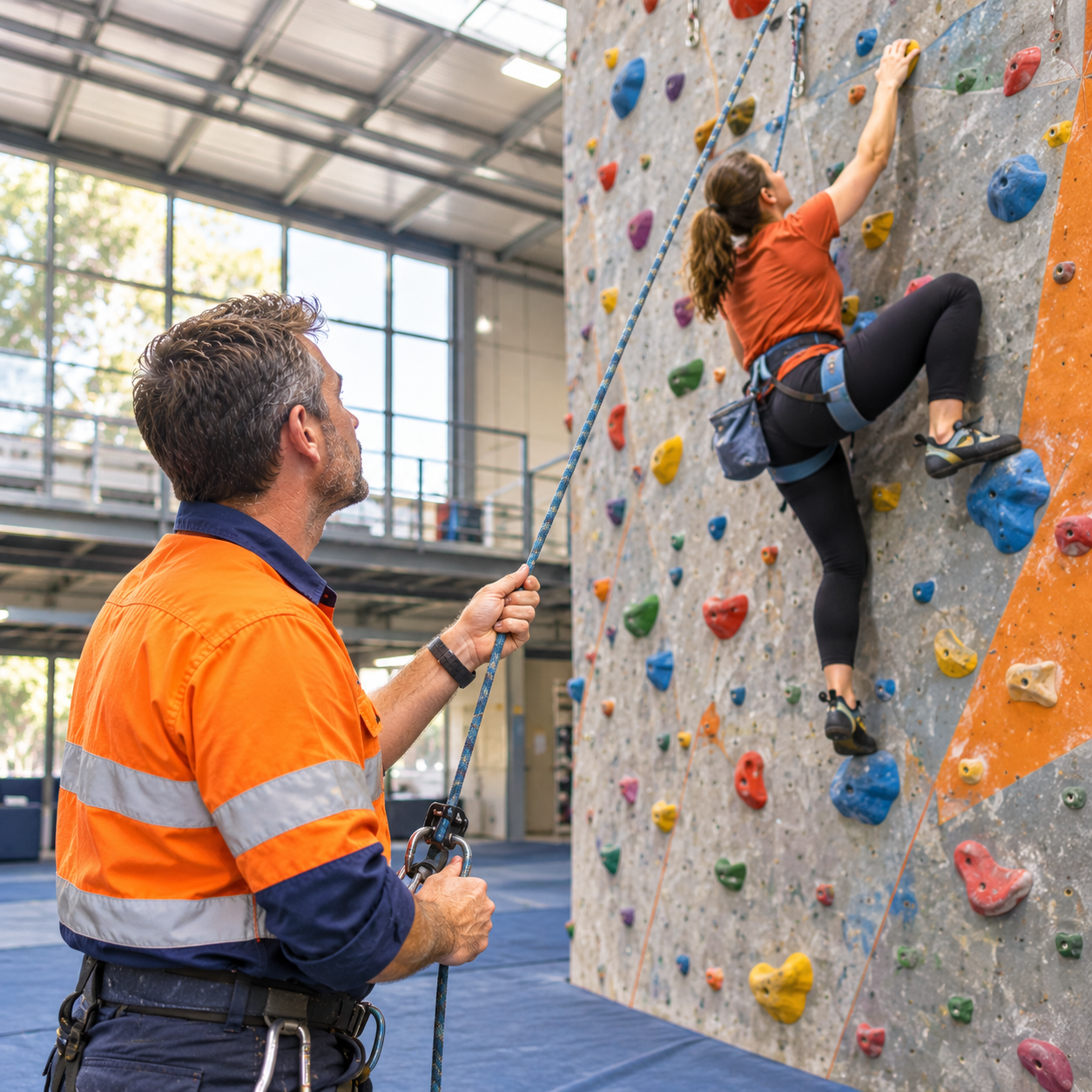
A child’s fall from an indoor climbing wall led to a $90,000 fine for a Queensland company on 17 September 2026. The case is a reminder that high-risk activities need reliable supervision and clear checks before participants use safety equipment.
What happened
The incident occurred on 24 March 2025 at an indoor rock-climbing and trampolining park operated by the company. A 10-year-old boy fell from a climbing wall about 8–10 metres high while attempting to use an auto-belay system without supervision. He sustained a serious, non-permanent injury requiring hospitalisation; the regulator report records abrasions, lacerations and a minor spinal injury.
The court outcome
The company pleaded guilty to breaching its primary health and safety duty under sections 19(2) and 32 of the Work Health and Safety Act 2011 (Qld), exposing people to a risk of death or serious injury.
The regulator’s summary says the company failed to ensure people were supervised in the climbing area and failed to provide supervision before users climbed, including to help ensure carabiners and the auto-belay system were used correctly. The Magistrate described the offending as low-to-medium range seriousness and noted that the risk could have catastrophic consequences. The controls that should have been in place were inexpensive and readily available.
The company was fined $90,000. The report also records professional and legal costs of $1,500 and court costs of $105.30. No conviction was recorded, and the time to pay was referred to SPER.
The report says the company later restricted access to the climbing wall with a locked gate, installed cameras and changed its arrangements so the area was always supervised. These were reported as post-incident measures; they do not replace the need to identify and manage risks before an activity begins.
Why this matters to managers
For businesses offering activities where a mistake can result in a fall, supervision is a risk control—not simply a customer service task. A sign, equipment briefing or safety procedure will not be effective if workers cannot see whether it is being followed or intervene when something goes wrong.
Managers should consider how controls work during busy periods, staff changes and interruptions. They should also make clear who is responsible for checking that users understand and correctly operate equipment before they start. Any access restriction or supervision arrangement needs to be practical, maintained and monitored.
What safety managers and supervisors should take note of
- Set supervision requirements: Define where supervision is required, who provides it and how cover is maintained during breaks, busy periods and shift handovers.
- Control access: Use workable arrangements to prevent unsupervised entry to higher-risk areas, and check that gates or other access controls remain effective.
- Check equipment use before activity: Provide appropriate instruction and verify that users understand how relevant safety equipment works before they climb.
- Make responsibilities clear: Tell workers who is responsible for monitoring the activity and what to do if a user is unsupervised, equipment is misused or a control fails.
- Review controls in practice: Observe the activity, record checks and address gaps promptly. Revisit the risk assessment when equipment, staffing or operating conditions change.
- Plan for emergencies: Ensure workers know how to raise an alarm, respond to an incident and arrange assistance.
These are practical management considerations, not legal advice. The case account is based on a regulator summary; no court judgment or sentencing remarks are attached to the source record.
Source information
- Regulator/source: Queensland WHS Court Reports 2026
- Source type: Regulator summary
- Decision date: 17 September 2026
- Publication date: Not supplied
- Source: Official source document