Note: the decision in this matter is the subject of an appeal
On 13 August 2026, the Brisbane Magistrates Court fined a public pool operator $575,000 after finding the operator guilty of breaching its work health and safety duty to other persons. The regulator’s summary states that the decision is subject to an appeal.
The case followed the drowning and subsequent death of a five-year-old child at an indoor public pool on 16 November 2019. The court found that the operator’s supervision arrangements did not adequately manage the foreseeable risks created by the pool layout, patron numbers and the presence of children.
What happened
The child attended the indoor pool with their mother and entered deeper water, described in the regulator’s summary as 1.2 metres deep. At the time, the duty manager was serving customers at the front counter and did not see what happened.
There were around 60 people in and around the pool. CCTV showed that no lifeguard walked around the pool perimeter for at least 13 minutes and 25 seconds.
The operator had an Aquatic Supervision Plan requiring indoor and outdoor pools to be supervised by a roaming lifeguard. The court found that the level of patronage meant a roaming lifeguard should have been present.
What the court found
The operator was found to have failed to take one or more measures that were reasonably practicable, including to:
- provide adequate supervision of the pool;
- roster additional staff;
- arrange for additional on-call lifeguards;
- prioritise lifeguard duties over front counter work and cleaning; and
- ensure on-duty lifeguards were relieved when attending to other tasks or taking breaks.
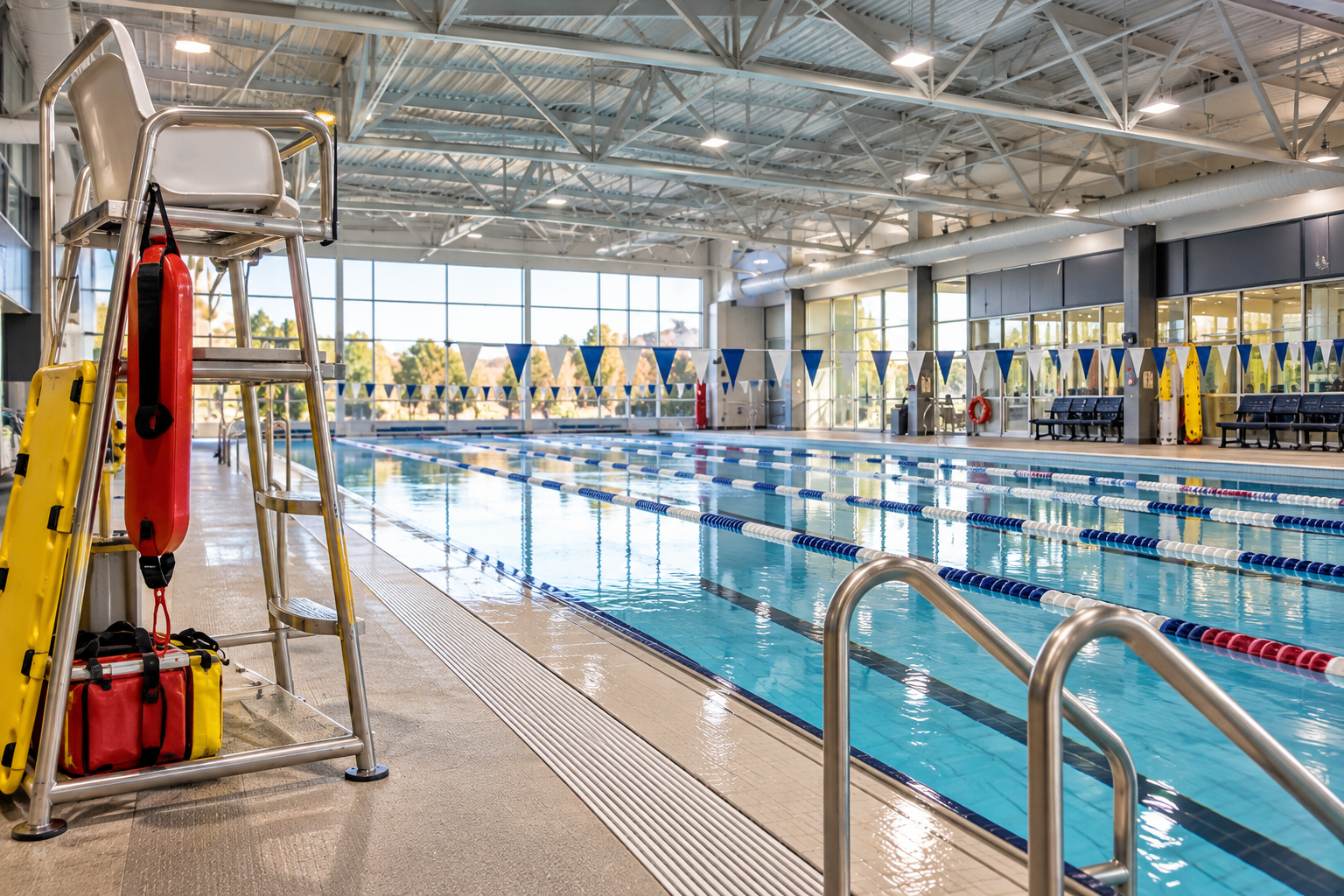
The court found that fixed supervision from the front counter was not proper supervision for the indoor pool. The pool’s ramp, bulkhead and learn-to-swim ledge affected visibility, while reflections and glare compromised the ability to see below the water surface.
The court identified several factors that increased the likelihood of a drowning, including:
- the number of people in and around the pool;
- children using the pool;
- the pool structure; and
- the ramp and associated bulkhead.
The regulator’s summary states that these risks were known to the operator and that it was reasonably practicable to provide continuous roaming supervision in accordance with the written supervision plan.
The offending was assessed as being in the mid-to-high range of seriousness. The court also considered that the risk was obvious and foreseeable, affected multiple people, and remained live for a considerable period. The harm caused was treated as an aggravating feature.
Penalty and outcome
The operator was fined $575,000. The court also ordered professional costs of $8,375 and a court filing fee of $101.40. The fine was referred to the State Penalties Enforcement Registry, and no conviction was recorded.
The regulator’s summary records that the operator pleaded not guilty and was found guilty after a five-day trial. The operator was not punished for proceeding to trial, although the court did not apply the mitigating benefit that may have followed an early guilty plea.
The court took into account the operator’s lack of criminal history, cooperation with the investigation, improvements to safety measures, standing in the industry and written expression of remorse. The decision is subject to appeal, so the outcome should be treated with that qualification.
Why this matters to business managers
The case illustrates that having a written safety plan is not enough if work practices do not implement it. A plan requiring roaming supervision may not protect people where staff are routinely diverted to customer service, cleaning, breaks or other duties.
It also shows why supervision arrangements need to reflect the actual environment, not just a general staffing ratio or a fixed observation point. Managers should consider whether structures, blind spots, glare, crowding, changing activities and the characteristics of people using the facility affect what a worker can realistically see and respond to.
The court’s findings also highlight the importance of escalation arrangements. If patron numbers increase, visibility deteriorates or a lifeguard must leave their post, the business needs a clear process for obtaining relief or additional coverage.
What managers should take note of
- Test supervision plans in practice. Confirm that workers can see all relevant areas from their assigned positions and during normal operating conditions.
- Identify and control blind spots. Review ramps, ledges, bulkheads, reflections, glare, plant, furniture and other features that may obstruct visibility.
- Set escalation triggers. Define when additional staff, an on-call worker or a temporary reduction in activity is required.
- Protect safety-critical duties. Do not allow front counter work, cleaning or other tasks to displace lifeguard or other high-risk supervision duties.
- Provide relief coverage. Make sure workers can take breaks or attend to other tasks without leaving a hazardous area inadequately supervised.
- Monitor changing conditions. Reassess controls when patron numbers, activities, staffing, weather, visibility or facility layout changes.
- Verify implementation. Use rosters, checklists, observation records, incident reviews and supervisor checks to confirm that the written plan is being followed.
- Review after incidents and near misses. Update the plan when monitoring shows that controls are not working as intended.
This article is general educational information, not legal advice. Businesses should confirm the requirements applying to their operations and obtain appropriate professional advice where necessary.
Source information
- Regulator/source: Queensland WHS Court Reports 2026
- Source type: Regulator summary
- Court: Brisbane Magistrates Court
- Decision date: 13 August 2026
- Incident date: 16 November 2019
- Publication date: Not supplied
- Source limitation: No court judgment, tribunal decision or sentencing remarks were attached to the supplied material. The regulator’s summary states that the decision is subject to appeal.
- Source URL: https://www.owhsp.qld.gov.au/court-report/pool-operator-fined-575000-after-child-drowning-0