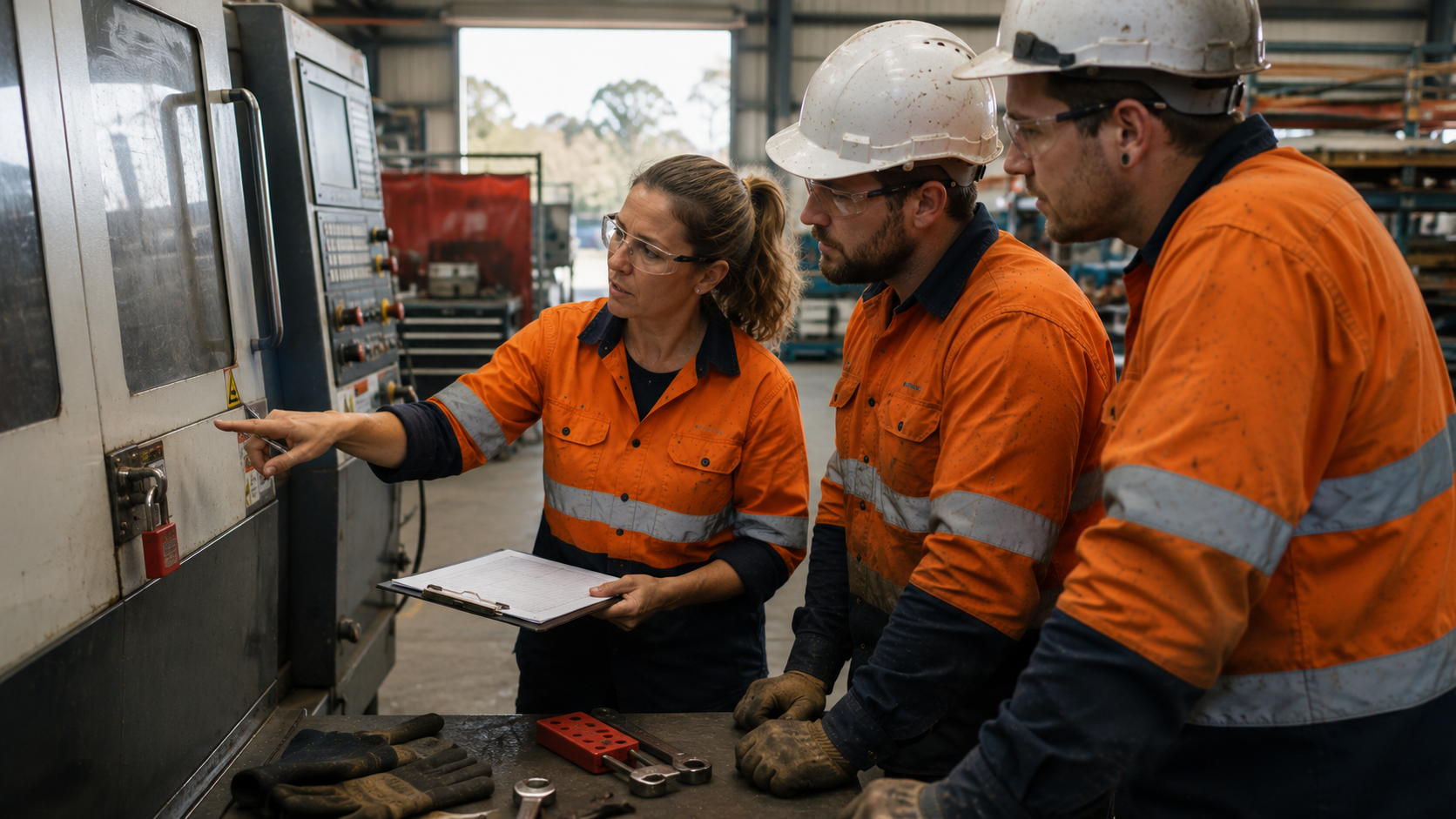
For many small business owners, workplace safety can feel overwhelming.
You know you have responsibilities.
You know you should have policies, procedures and safety documentation.
But you probably don't have a dedicated Work Health and Safety (WHS) manager sitting in the office keeping everything up to date.
The good news is that most small businesses don't need one.
A practical small business safety system is built through good planning, consistent leadership and simple processes that become part of everyday work. The aim isn't to create hundreds of pages of documentation. It's to make sure everyone goes home safely at the end of the day.
Whether you employ five people or fifty, the same principles apply.
Start With Your Biggest Risks
One mistake many businesses make is trying to document everything before they understand what actually presents the greatest risk.
Instead, begin by asking simple questions.
- What work could seriously injure someone?
- What equipment presents the greatest hazards?
- What activities happen every day?
- Where have near misses occurred previously?
- What concerns have workers raised?
These answers become the foundation of your safety system.
For example, a landscaping contractor may identify chainsaws, trailers, manual handling and traffic management as the primary risks. A small engineering workshop may focus on welding, grinders, forklifts and hazardous chemicals.
Every business is different.
Your safety system should reflect the work you actually perform.
Keep Documentation Practical
Many businesses download large template manuals that look impressive but don't reflect how work is carried out.
Workers quickly recognise when procedures don't match reality.
Instead, focus on documentation that people will genuinely use.
Examples include:
- a simple safety policy
- clear SWMS for higher-risk activities
- straightforward incident reporting
- equipment inspection checklists
- pre-start discussions
- induction records
- maintenance records where appropriate
If a document doesn't help someone make a safer decision, ask whether it needs to exist.
Simple documents that are used regularly provide far greater value than comprehensive manuals that nobody reads.
Make Safety Part of Daily Operations
The most successful small businesses don't separate safety from normal work.
Instead, they build safety into everyday activities.
That may include:
- discussing today's work during morning pre-starts
- checking equipment before use
- reporting hazards immediately
- fixing issues while they're still small
- reviewing incidents together
- encouraging workers to suggest improvements
These activities often take only a few minutes but significantly improve awareness and communication.
When safety becomes routine, compliance usually follows naturally.
Give Supervisors Clear Responsibilities
Even if your business doesn't have a dedicated safety manager, someone still needs to provide leadership.
Owners, managers and supervisors should understand their role in:
- monitoring work
- correcting unsafe practices
- supporting workers
- reviewing incidents
- following up corrective actions
- ensuring agreed controls remain effective
Leadership doesn't require specialist qualifications.
It requires consistency.
Workers quickly notice whether supervisors actively support safe work or only mention safety when something goes wrong.
Involve Your Workers
The people performing the work usually have the best understanding of practical risks.
Ask them:
- Which tasks are becoming more difficult?
- What equipment needs attention?
- Which procedures don't work well?
- What improvements would make the job safer?
These conversations often identify practical improvements long before they appear during an inspection or audit.
When workers help shape the safety system, they are also far more likely to support it.
Build the System Gradually
A common misconception is that every safety document must be completed before the business can operate effectively.
In reality, good safety systems grow over time.
Start with the essentials.
As your business expands, add:
- contractor management
- formal inspections
- scheduled audits
- training matrices
- emergency planning
- health monitoring where required
- digital record keeping
Trying to build everything in a single week often leads to unnecessary complexity.
Building steadily produces a system that reflects the way your business actually operates.
Use Technology Where It Adds Value
Technology should simplify safety management, not create additional administration.
Digital systems can help with:
- SWMS distribution
- pre-start records
- equipment inspections
- corrective action tracking
- training records
- asset management
- reporting
The best systems reduce duplication and make information easier to access.
However, they should never replace supervision, communication or good leadership.
Technology supports people.
It doesn't replace them.
Review and Improve
No safety system is ever finished.
Businesses change.
Workers change.
Equipment changes.
Customer requirements change.
Review your system regularly by asking:
- Are workers using the procedures?
- Have new hazards appeared?
- Have incidents identified gaps?
- Are inspections leading to improvements?
- Is documentation still practical?
Continuous improvement doesn't require major annual reviews.
Small improvements made consistently usually deliver better long-term results.
Safety Doesn't Have to Be Complicated
Many small businesses delay improving safety because they believe they need a dedicated WHS department.
They don't.
They need practical leadership.
Simple systems.
Worker involvement.
Regular communication.
And a willingness to continually improve.
That's exactly how strong safety cultures develop.
A practical small business safety system should support your business—not overwhelm it.
If your documentation is becoming difficult to maintain, or you're unsure where to start, practical guidance can save significant time while helping ensure your system remains proportionate to your business.
Practical Safety Advisory works with Australian businesses to build practical WHS systems that suit their size, industry and level of risk—helping owners focus on running their business while maintaining effective safety management.