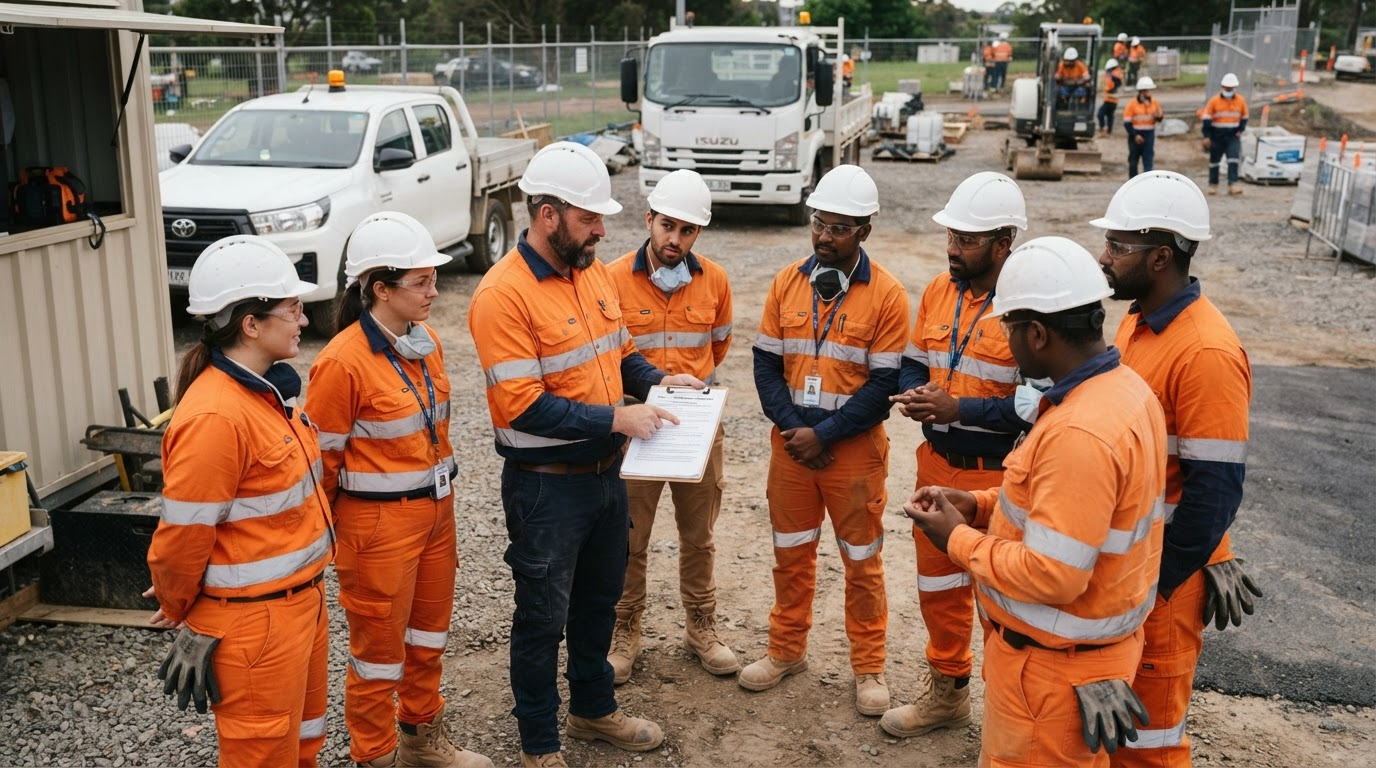
Every business wants a safe workplace. Most also want to meet their legal obligations and demonstrate that they take work health and safety seriously.
That's where safety systems come in.
Policies, procedures, Safe Work Method Statements (SWMS), inspections, training records and risk assessments all play an important role in helping businesses manage risk. When they're practical and actively used, they provide a framework that supports safer decisions every day.
Unfortunately, some safety systems gradually become something quite different.
Instead of helping people work safely, they become collections of documents that are only opened when an auditor arrives, a client requests evidence of compliance, or an incident forces someone to find the paperwork.
The result is a system that may appear impressive in a filing cabinet or online portal but contributes very little to reducing actual workplace risk.
So how can you tell whether your safety system is working for your business—or simply working for your auditors?
Here are five common warning signs.
Sign 1: Nobody Uses the Documents During Normal Work
One of the easiest ways to assess a safety system is simply to observe a normal day.
Ask yourself:
- Are supervisors referring to SWMS before high-risk work starts?
- Do workers use pre-start checks because they see value in them?
- Are procedures readily available when decisions need to be made?
- Can workers explain the key controls without searching through folders?
If the only time safety documents appear is during an audit, they're unlikely to be influencing how work is actually performed.
Good documentation should support workers, not sit untouched on a shared drive.
For example, a construction business may have dozens of excellent SWMS covering excavation, working at heights and mobile plant. However, if supervisors never discuss them with crews before work begins, those documents are providing little practical value.
The paperwork exists.
The safety conversations do not.
Sign 2: Documents Are Updated Only Before Audits
Many organisations experience a familiar rush before an external audit.
Policies suddenly receive new review dates.
Registers are updated.
Training records are chased.
Inspection forms are completed.
While there's nothing wrong with preparing for an audit, problems arise when this becomes the only time the safety system receives attention.
An effective WHS system should be continuously maintained.
Examples include:
- reviewing incidents as they occur
- updating risk assessments when work changes
- improving procedures after worker feedback
- replacing outdated forms
- recording completed corrective actions promptly
Regular maintenance keeps the system current and useful.
Waiting until audit season often means the documentation no longer reflects how work is actually being performed.
Sign 3: Workers Were Never Involved
One of the strongest indicators of an ineffective safety system is a complete lack of worker involvement.
Workers are the people performing the tasks every day.
They understand:
- what actually happens onsite
- where shortcuts develop
- which controls work well
- which procedures are unrealistic
If documents are written without consulting the people doing the work, they often become overly complicated or disconnected from reality.
Workers may simply stop using them.
Instead, involve employees when:
- developing SWMS
- reviewing procedures
- identifying hazards
- investigating incidents
- improving work practices
When workers contribute to the process, they are far more likely to support and follow the resulting controls.
Just as importantly, businesses benefit from practical knowledge that managers may never see from the office.
Sign 4: Success Is Measured by Paperwork Instead of Outcomes
Some businesses proudly report:
- 150 completed inspections
- 98% training compliance
- 600 completed checklists
- 45 updated procedures
These figures certainly demonstrate activity.
But do they demonstrate safer workplaces?
Not necessarily.
The better questions include:
- Are hazards being eliminated?
- Are corrective actions completed?
- Are incidents reducing?
- Are workers raising concerns?
- Are supervisors actively monitoring risks?
- Are lessons from incidents preventing repeat events?
Safety documents are tools.
They are not the objective.
The objective is reducing the likelihood of people being injured or becoming ill because of their work.
A business that completes fewer forms but consistently addresses hazards may achieve significantly better safety outcomes than one producing paperwork simply to satisfy reporting requirements.
Sign 5: Supervisors See Safety as Administration
Supervisors influence workplace safety more than almost anyone else.
If supervisors believe safety consists mainly of completing forms, workers quickly receive the same message.
Strong supervisors:
- discuss hazards before work starts
- verify risk controls are in place
- coach workers when unsafe behaviours are observed
- encourage reporting of hazards and near misses
- follow up corrective actions
- lead by example
Documentation supports these activities—it does not replace them.
Regular pre-start meetings, site inspections and informal conversations often prevent incidents long before a document would.
When supervisors actively use the safety system rather than simply administering it, safety becomes part of normal operations instead of another compliance task.
Why This Matters
A safety system should never exist simply because legislation requires documentation or because clients expect evidence of compliance.
Its real purpose is to help people make safer decisions.
Every policy, checklist, inspection and SWMS should answer one simple question:
How does this help someone work more safely today?
If the answer isn't obvious, it may be time to simplify or redesign that part of the system.
Many businesses accumulate documents over years of operation.
Procedures are copied from previous employers.
Templates are downloaded from the internet.
Additional forms are introduced after each audit.
Eventually, the system becomes larger—but not necessarily better.
Sometimes removing unnecessary paperwork delivers greater improvements than creating more.
Building a Practical Safety System
An effective WHS system is practical, understandable and regularly used.
Consider focusing on these principles:
Technology can also assist when used appropriately.
Digital SWMS, electronic pre-starts and structured inspection records can make information easier to access and review. However, technology should support good safety practices—not replace leadership, supervision or meaningful conversations.
Turning Compliance into Everyday Practice
Audits are valuable.
They identify gaps, confirm compliance and encourage continual improvement.
But they represent only occasional snapshots of a business.
Real safety happens every working day.
It happens when supervisors ask questions before work starts.
It happens when workers stop and reassess a task because conditions have changed.
It happens when hazards are reported early, corrective actions are completed promptly and lessons are shared across the business.
Those activities rarely attract attention during an audit because they have already become part of the organisation's culture.
That is ultimately what every safety management system should be aiming to achieve.
"The best safety systems aren't remembered because they passed an audit—they're remembered because they helped people go home safely every day."
Final Thoughts
If your safety system only receives attention before an auditor arrives, it's worth asking whether it is delivering the value your business expects.
A practical system should help supervisors lead, workers understand their responsibilities and managers identify opportunities for improvement long before an incident occurs.
Rather than measuring success by the number of documents you've created, measure it by how often those documents help people make safer decisions.
If your WHS system feels overly complicated, difficult to maintain or disconnected from everyday operations, practical improvements are often simpler than many businesses expect.
Talk to Practical Safety Advisory about practical WHS system support that fits the way your business actually operates—not just the way an audit checklist expects it to.