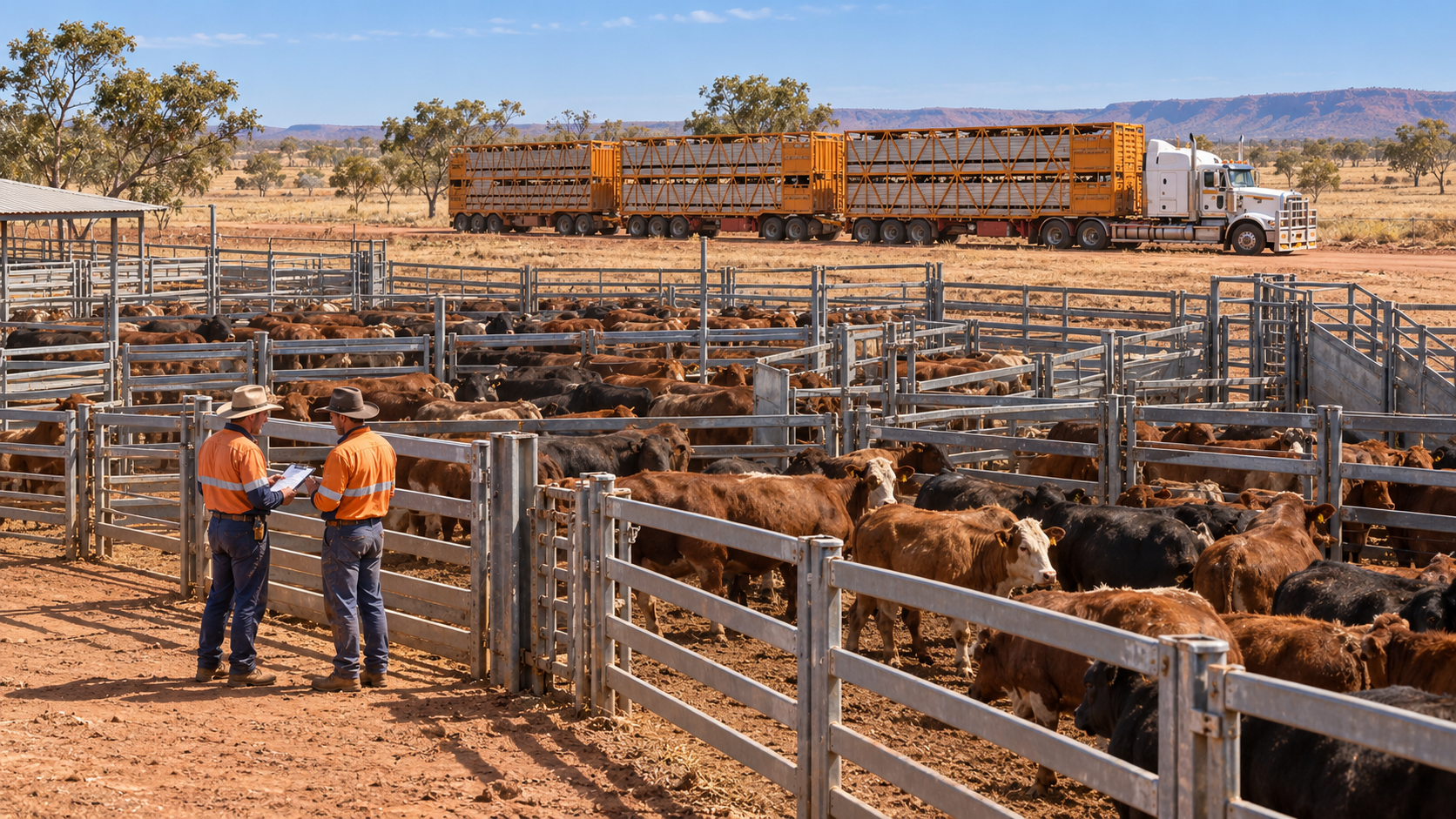
A worker died and another was injured while loading cattle onto a double-deck trailer on 29 February 2024. On 6 May 2026, the Brisbane Magistrates Court fined the company that operated cattle stations $375,000 over its failure to manage risks connected with the work.
What happened
The incident occurred while workers were loading cattle onto a double-deck trailer. One worker was killed and another was injured. The regulator’s summary says the company’s failures exposed people to a risk of death or serious injury, and that the risk was realised in this incident.
What the court found
The company pleaded guilty to an offence under sections 19(1) and 32 of the Work Health and Safety Act 2011 (Qld). The sentencing basis, as reported by Workplace Health and Safety Queensland, identified three gaps:
- There was no regular maintenance and inspection system for double-deck cattle trailers that included checks of particular components.
- There was no safety procedure for loading and unloading cattle that set out important requirements and prohibited workers from performing certain tasks.
- Workers were not trained and instructed in that safety procedure.
The court imposed a $375,000 fine. The regulator’s report states that no conviction was recorded. It also reports $1,500 in professional and legal costs and $105.35 in court costs; those amounts are separate from the fine.
Why this matters to business managers
The reported failures were connected: equipment checks, safe work instructions and worker training were all part of the sentencing basis. A procedure is less useful if it does not address the specific hazards and tasks involved, or if workers have not been instructed in how to follow it.
For managers, the practical lesson is to check that safety arrangements work together on the job. Inspection systems should identify which components need attention and how defects are handled. Work procedures should explain safe task steps and clearly identify prohibited actions. Training should prepare workers to apply those instructions in practice.
The regulator summary is the available source for this account; no court judgment or sentencing remarks are attached to the source record. The details below reflect that summary.
What managers should take note of
- Make inspections specific: Set a regular inspection and maintenance process for relevant equipment, identify the components to be checked, and ensure faults are followed up before equipment is used.
- Write procedures for the actual task: Cover the sequence of work, key hazards, required controls and tasks workers must not perform during loading and unloading.
- Train and instruct workers: Explain the procedure before work begins and check that workers understand how it applies to the equipment and task.
- Check that controls are being used: Supervisors can observe the work, ask workers to explain the relevant steps and address gaps when procedures or equipment are not fit for the task.
- Review arrangements when work changes: Revisit inspections, procedures and training when equipment, work methods or site conditions change.
These are practical management prompts, not legal advice. Businesses should consider the risks and requirements relevant to their own work.
Source information
- Regulator/source: Workplace Health and Safety Queensland
- Source type: Regulator summary
- Decision date: 6 May 2026
- Source URL: Official source document